
I need help: props to props and imperfection.
Happy New Year, Galaxy! I’m writing this on New Year’s Eve, and I feel it’s likely that I’ll be snuggling in bed early as my kids are hanging out at parties and I get ready to wake up early and run and lift heavy things. It’s weird, really weird, how fast time goes, and how things change, but I’m not complaining even a tiny bit.
Back due to popular demand, we have another month of props on deck for January (requested by our amazing teachers, love those peeps). Last time we did this, I gave a little context for the how and why of props, which you can read again if you forgot.
One time, a long time ago, I got into a slightly heated discussion with a fellow yoga teacher about what was and wasn’t “real” yoga. Like many disciplines that are passed from student to teacher, there is a constant, delicate dance to preserve and honor the roots of the practice, and to continue to innovate and refine. It feels like we’ve largely moved beyond Vinyasa yoga being a bastardization of the pure practice, but even 10 years ago, Vinyasa was really considered to be a lesser practice than slower, alignment-based yoga styles. I think that there are still slight whispers of that, but I also think we’re moving out of that stigma, and Vinyasa is considered to be a practice that stands on its own merits.
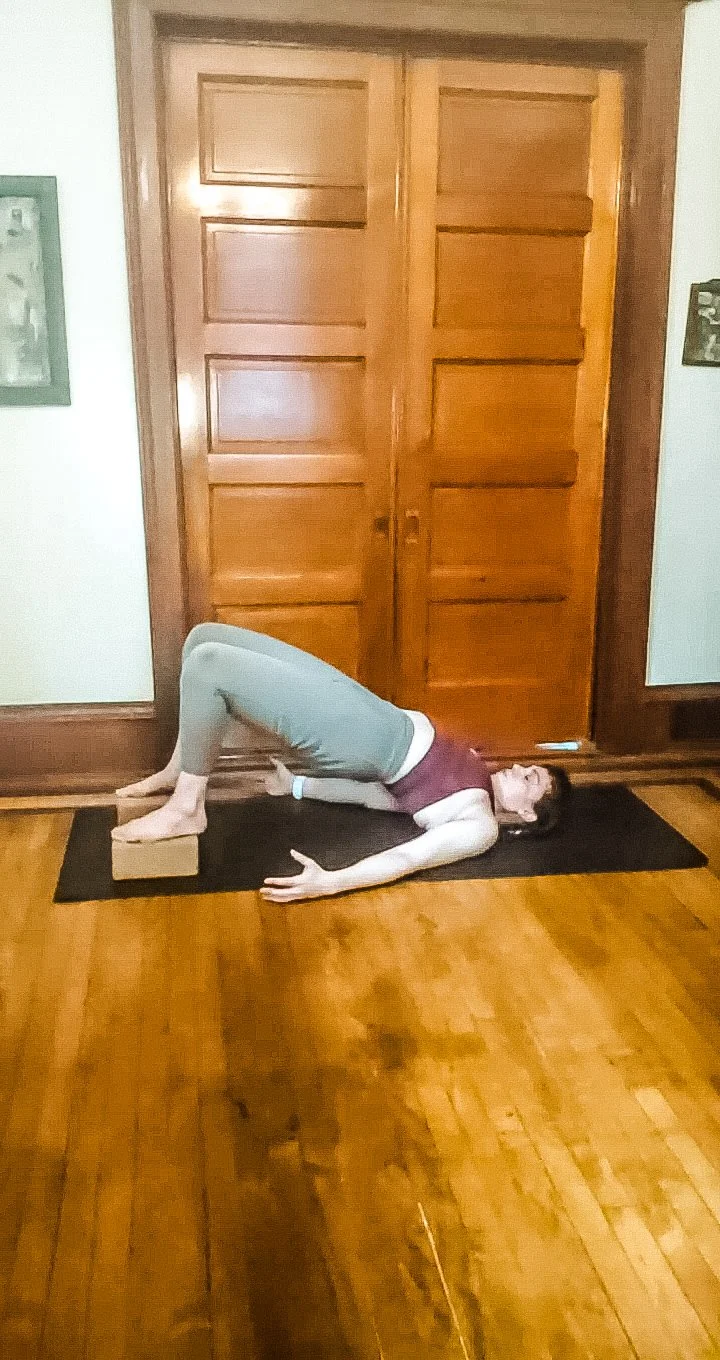
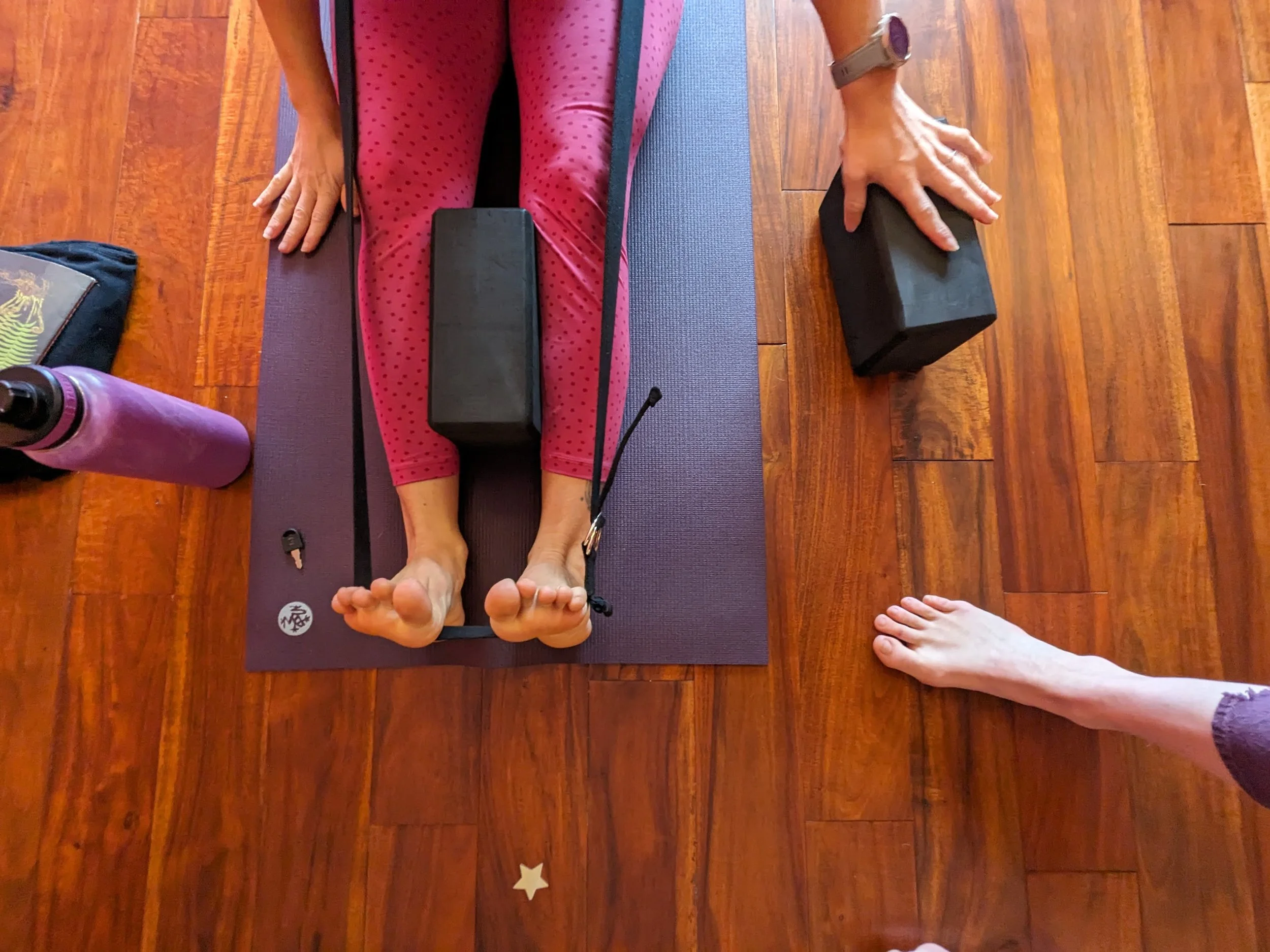
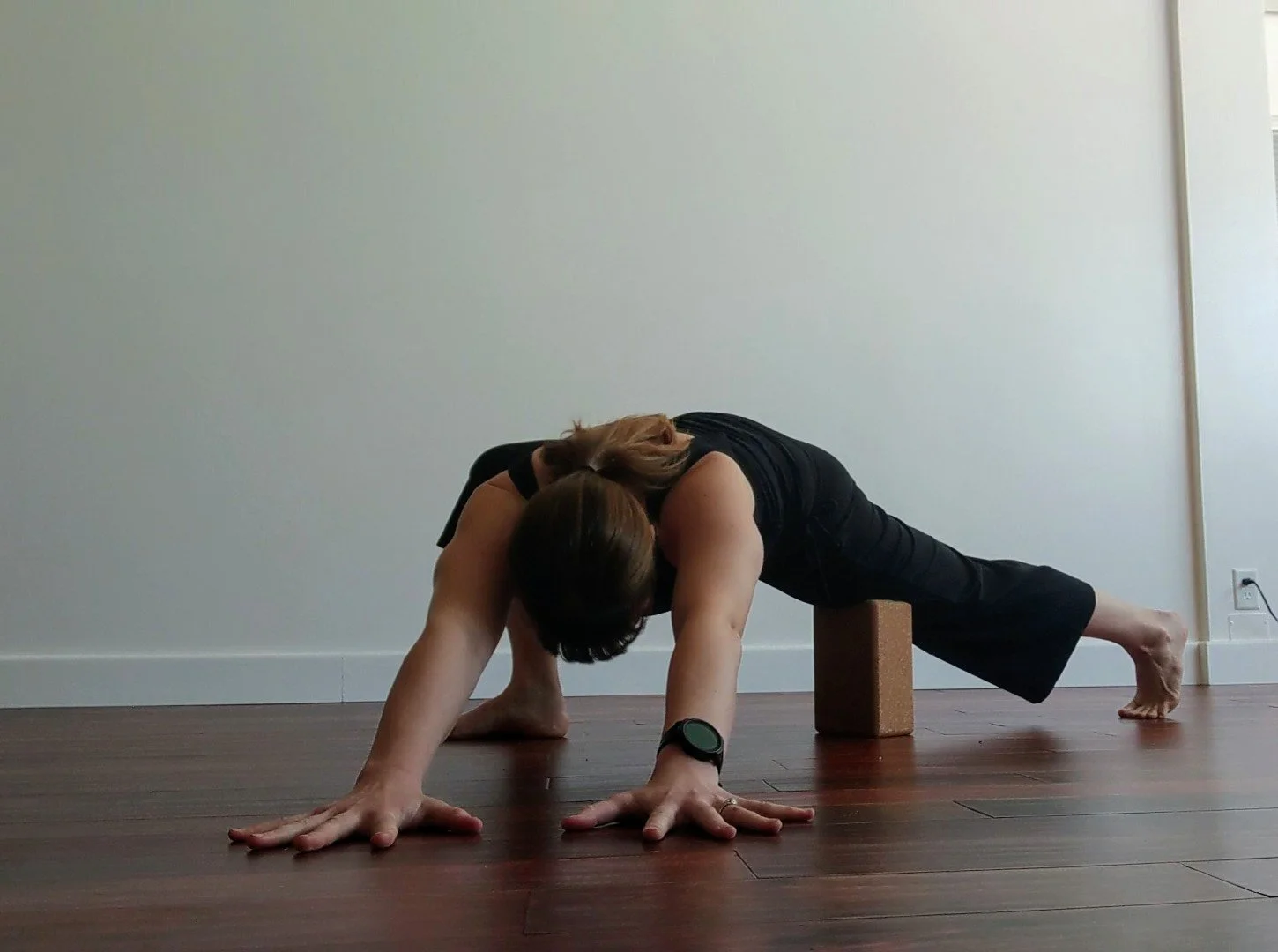
Anyway, in discussion with this teacher, who showed up to a class of mine and moved at half the speed of the rest of the class participants and what I was cueing (to my major eyerolls…),they said that they simply couldn’t practice at the speed my classes were going, because they wouldn’t be able to execute the poses properly, and that it wasn’t true to the spirit and legacy of yoga. To which I replied: slow, alignment-based postural yoga practices like Iyengar yoga were the rogue styles of their time, working in ways that were deliberately different from the earlier practice style of Krishnamacharya. As we’ve already learned, even props were once an addition to the practice that disrupted the legacy of the teachings in a way that some people looked down on.
I’m actually pretty jazzed that we’re moving beyond the idea that there is one true alignment that all bodies must fit into, and focusing more on a balance between the teacher’s eye on the bodies, and the students’ own felt experiences. I love that it’s becoming more popular to prioritize cueing to actions rather than body positions. And I love the phrase “there is no bad alignment, just alignment that we haven’t trained and properly prepared for.” It’s all the rage on the social media accounts that I follow and love, and I’m all about it. Maybe the practice of Vinyasa is to remind us that we don’t have to be in perfect alignment (if that exists) at every moment. We can move in and out of alignment and do the best we can do, while flowing… that actually feels like a pretty powerful life lesson for times when we get stuck in the realm of perfect and let it become a road block.
I don’t have a magic formula or solution to which evolutions in the practice are helpful, and which dilute and disrespect the lineage, but I think some questions we can ask ourselves are: does this allow the practice to meet more people where they happen to be? Does it facilitate a deeper understanding of what the legacy of yoga is, or does it distract people from that path of discovery?
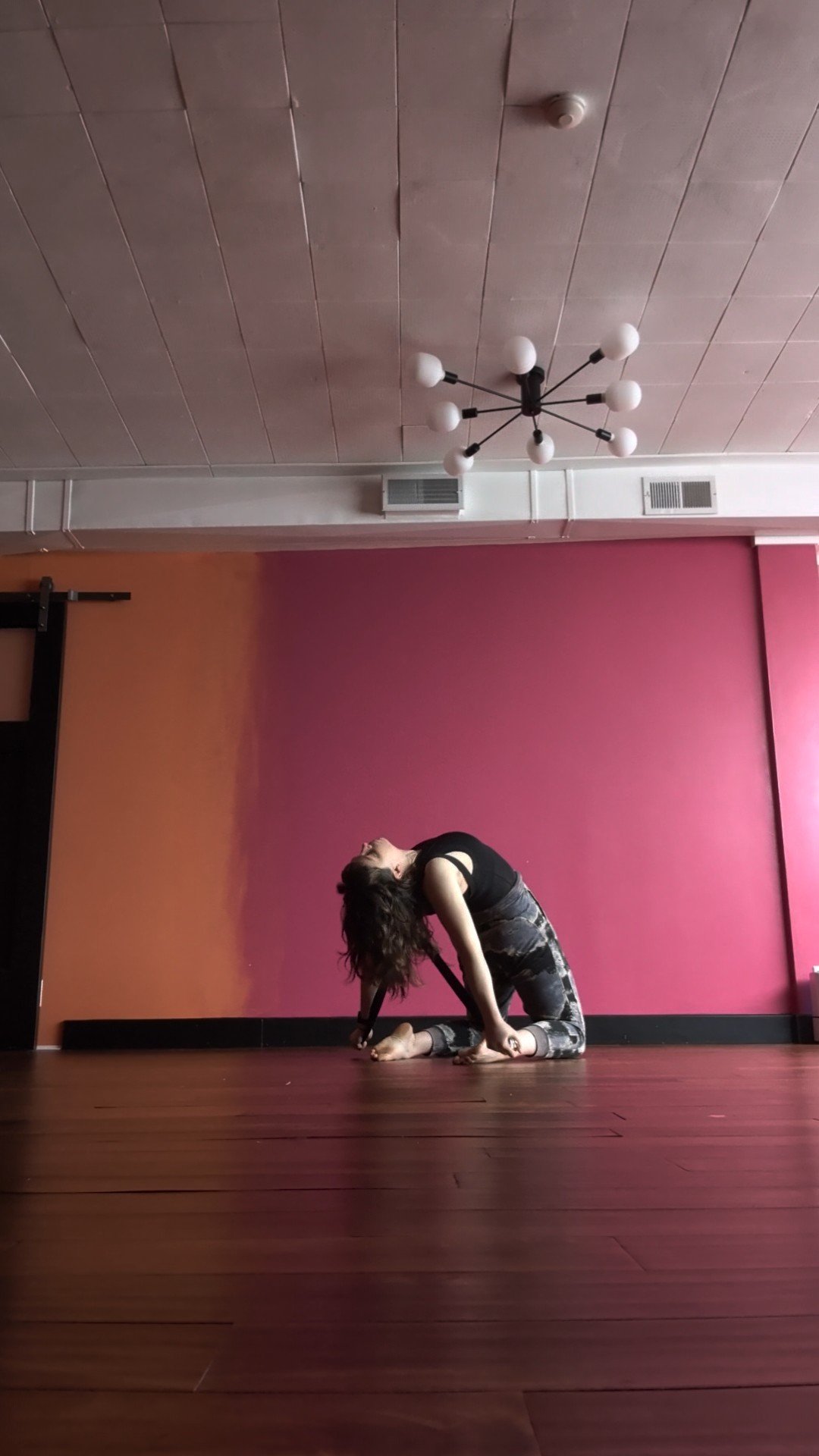
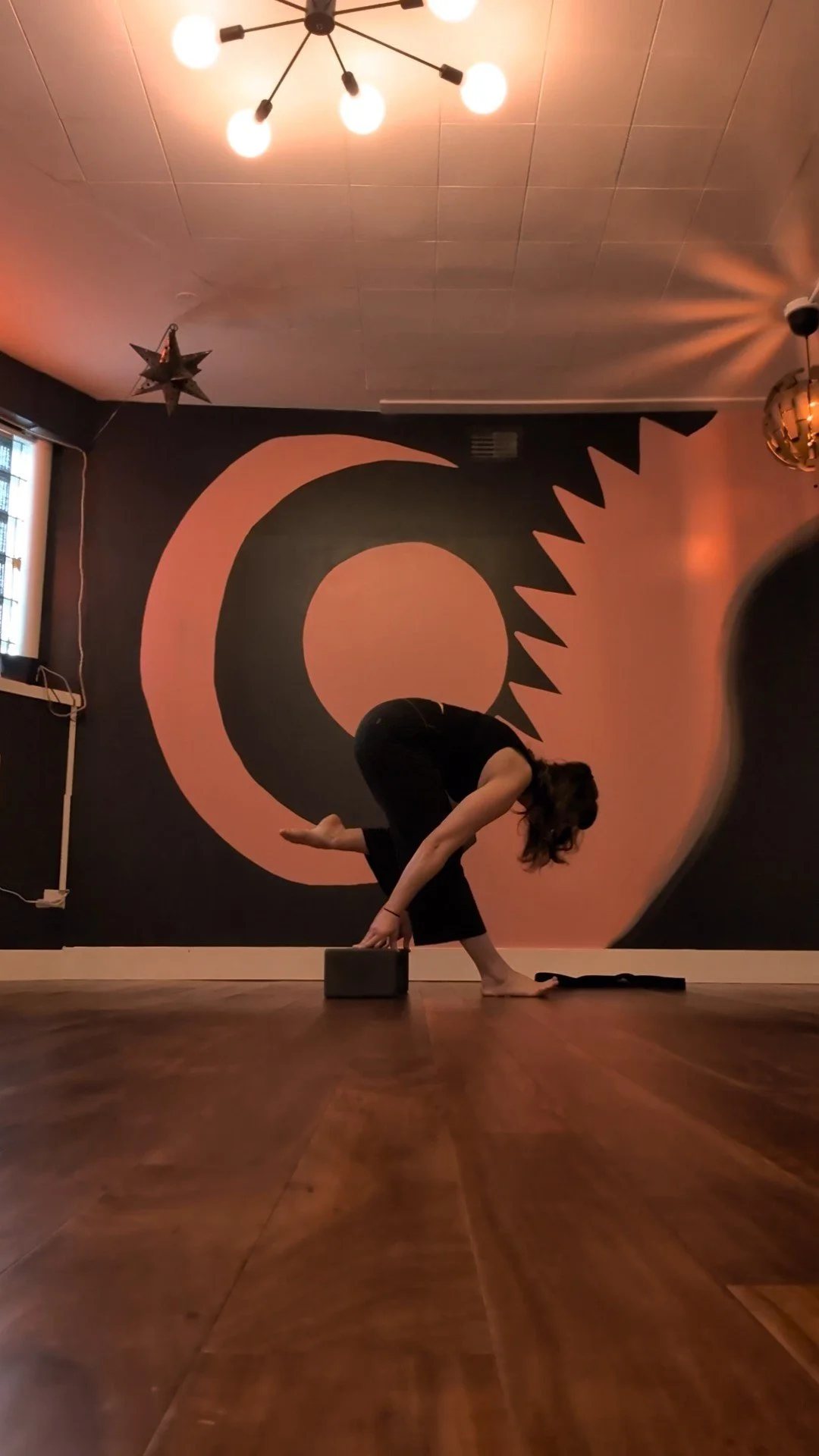
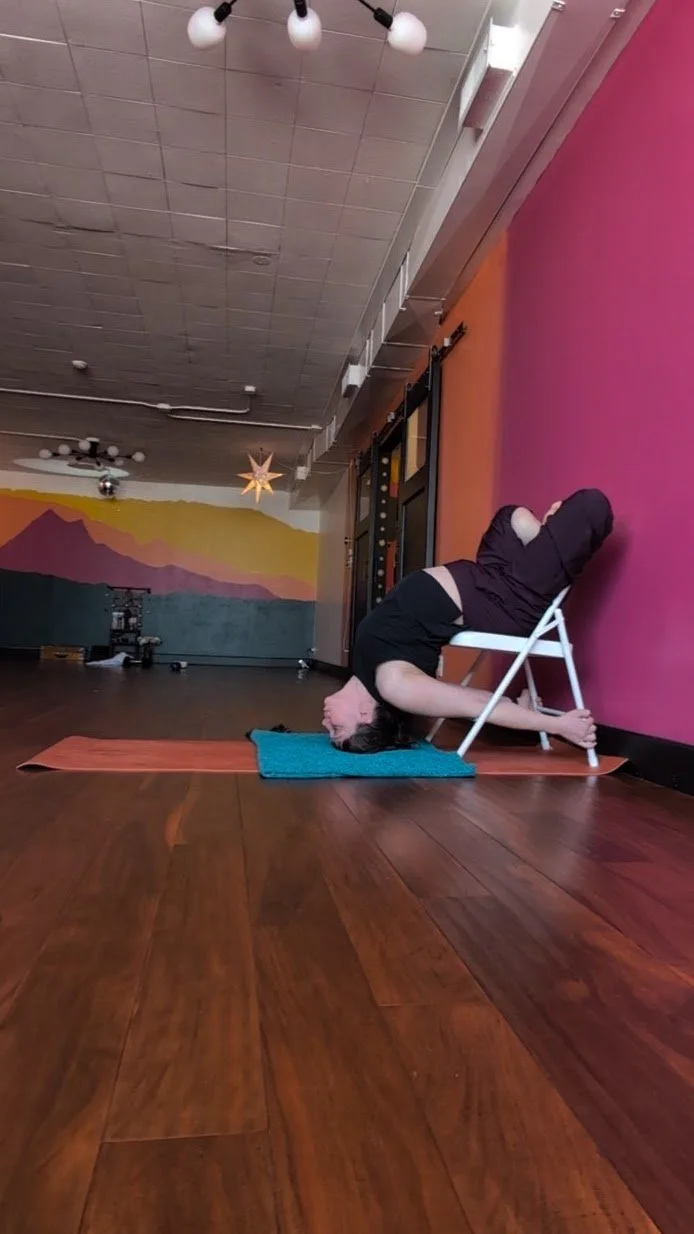
And on a very simple level, I think using and celebrating props helps us to deeply ground in the experience of the asanas in ways that eliminate discomfort, difficulty, and fear. Moving further into props (like I will later this month at my Maha Practice) they can also serve to help us understand energetic direction, boundary, detail and depth in ways that we might not uncover if we didn’t use them.
In a same but different framework, I’m also jazzed that yoga is continuing to evolve out of harmful guru-student dynamics that create abuses of power and cult dynamics. This is a legacy of many contemplative practices that NEEDS to change and die and be reborn in ways that are more sustainable.
I think about that deeper flaw in the lineage of yoga and meditation quite a bit, as the head of a yoga space. I have seen examples of exemplary leadership and stewardship, but I’ve also seen examples of good people letting power go to their heads, and witnessed first hand how it can harm a community. I don’t have any surefire solutions to that, but one thing that immediately stands out as something that keeps me and the Galaxy on a healthy path: the amazing roster of teachers at the Galaxy. Their skills and contributions of Galaxy teachers creates and maintains a healthy work environment-slash-spiritual community-slash-movement studio. Which is no small feat. Prioritizing the individual skills and unique voices of our community of great teachers is one way that I try to avoid the pitfalls of poor leadership.
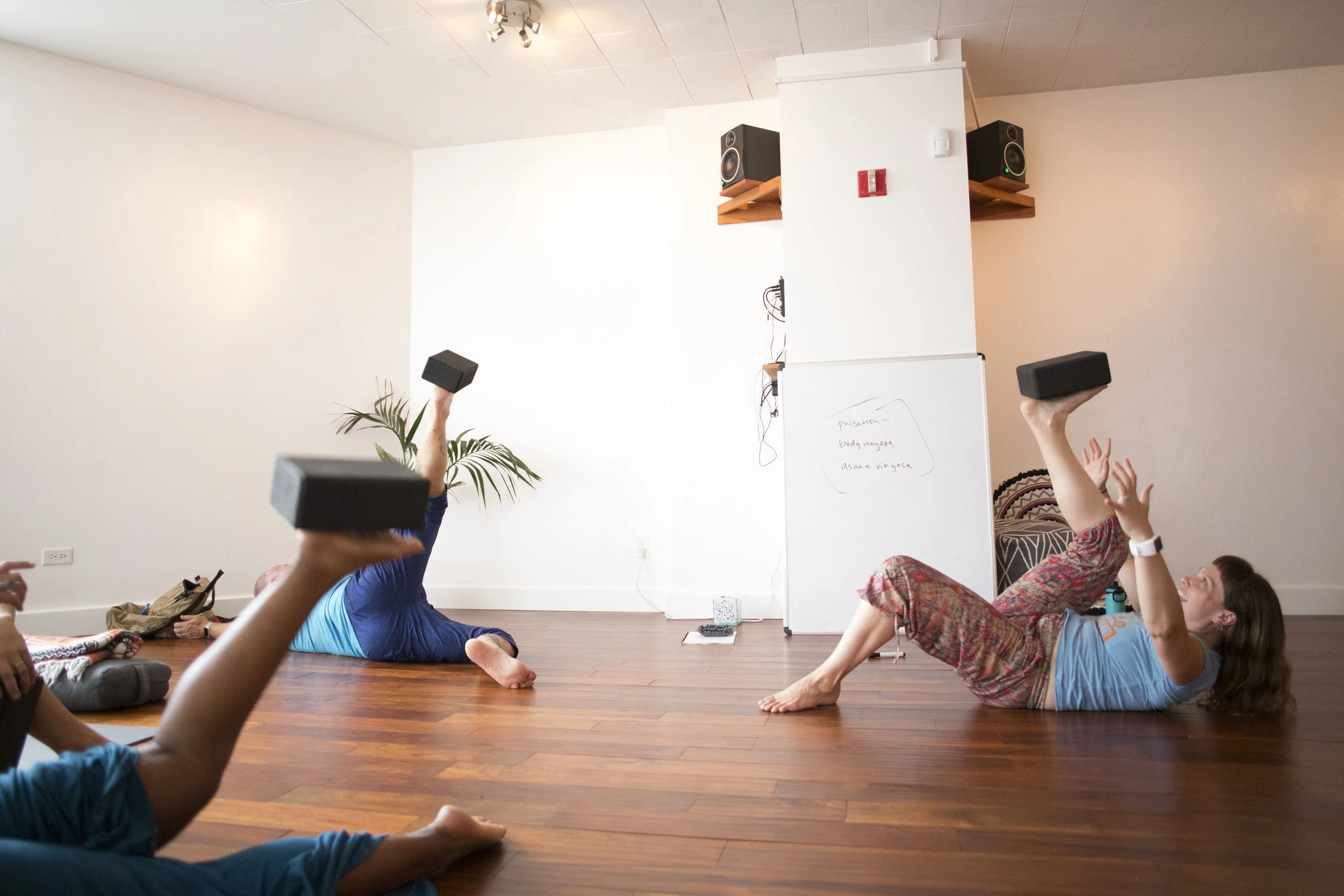
And then I come back to think about props as more of a metaphor. Although there is more to them than support, sometimes props are there simply because you couldn’t do the pose otherwise. In a small way, we have to declare that we need help, because we’re not perfect, and allow props to give us a dose of reality. They keep us grounded and humble.
I want things that keep me grounded and humble. A few things that come to mind:
My monthly-ish curds and cocktails date with my good friend and super talented teacher, Sarah Filzen, who recently said to me that as long as I kept playing The Stooges in my classes, there was no way I would ever lose my way and turn into a cult leader (because I literally worry about EVERYTHING, y’all. Everything.) I don’t think it’s that easy, but I know what she means.
My kids and husband, who love embarrassing me and calling me out when I get a little too much for them. Having to show up for them and knowing that they know me inside and out keeps it real.
Putting myself in places and spaces where I’m a beginner, challenged at something that I’m not particularly good at, and continuing to do it, even though I’m not going to be the best at it: I’m looking at you, Orange Theory and Coach Kristin. I just keep running on that treadmill and rowing on that rower, and I’m pretty slow, but I’m not going to quit. I’m going to run a half marathon this year for the first time since 2021, and I’m quite certain it’s going to be my slowest half marathon ever, but I’m going to do it anyway.
This practice, these props, these teachers and these spaces where we can be beginners, remind me that, simply: I need help. It’s a powerful reminder. It’s a great mantra.
It’s okay to need help.
I need help in the best way.
I want to keep needing this kind of help for a long time.
Xo,
a
What I’m Reading…

Santa Claus in the form of my husband, Mike, brought me this delightful little book by venerable food writer Betty Fussell: How to Cook A Coyote: The Joy of Old Age.
Part memoir, part meditation on aging, and part instruction manual on how to cook a coyote (really, but not really…) Maybe we can read it together for January, because I haven’t finished it yet! And speaking of coyotes, if you’re interested, I’ll tell you about my spiritual coyote meetups next time I see you at the studio.